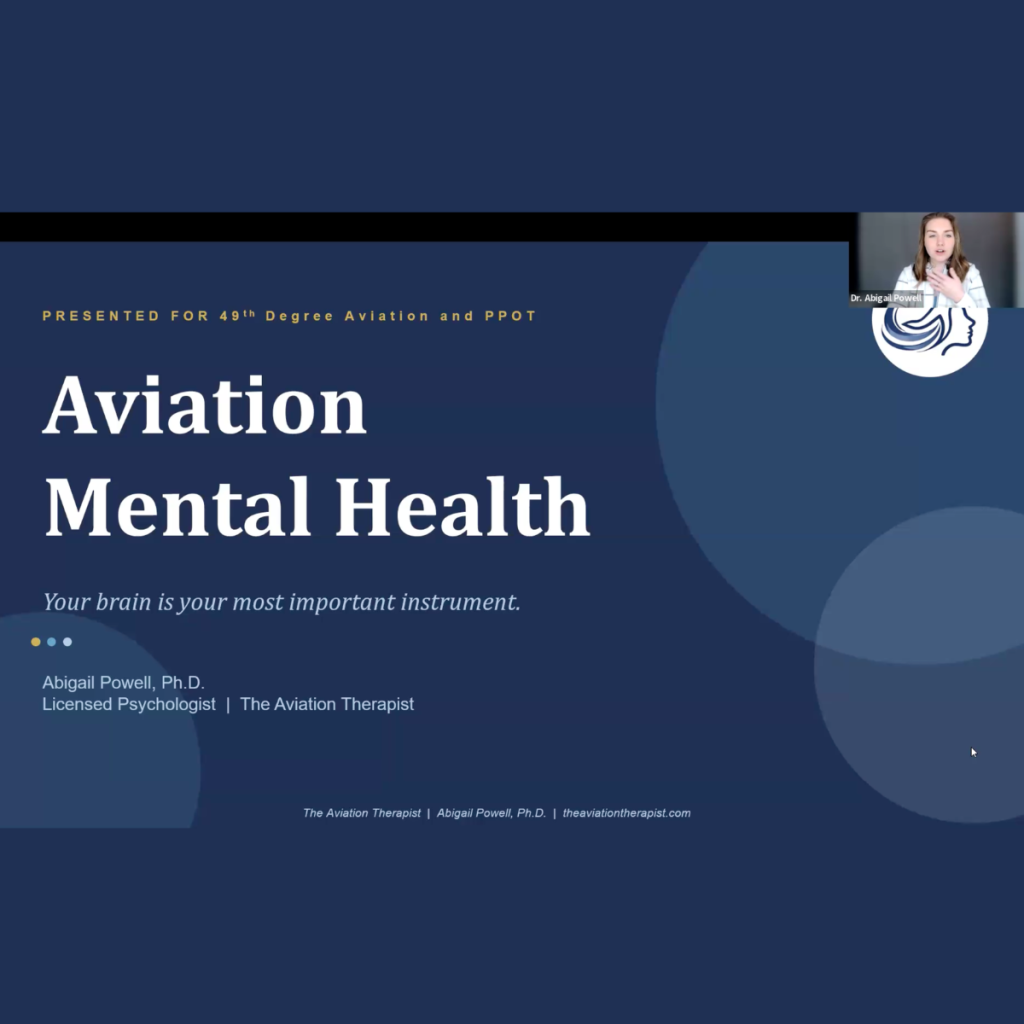
On October 26, 49th Degree Aviation and our partners at Professional Pilots of Tomorrow (PPOT) welcomed Dr. Abigail Powell for a candid conversation about mental performance in aviation. Dr. Powell is a licensed psychologist and the founder of The Aviation Therapist, a telehealth practice built exclusively for aviation professionals. She also comes from three generations of aviators, so she knows this lifestyle from the inside.
Pilots joined from across Canada, the United States, and as far away as Edinburgh. Here are a few of the ideas that stood out.
Mental health is brain health
Dr. Powell opened by reframing the conversation. We put enormous effort into keeping aircraft in top condition, yet we rarely give the same attention to the instrument that runs everything else: our brain. Fatigue, chronic stress, and disrupted sleep all degrade decision making and situational awareness. Treating your brain like equipment that needs routine maintenance is not a weakness. It is risk management.
The aviation brain, in four parts
She walked through four systems that shape how pilots perform and recover:
Prefrontal cortex. Your command centre for judgment, decision making, and working memory. Under sustained stress or fatigue, it is often the first thing to go offline.
Amygdala. Your threat detector. It fires before your rational brain can weigh in, which is why an unexpected ATC call or crew conflict can hit so hard. It also explains why some pilots stay on high alert long after they get home.
Hippocampus. Your memory and context centre. A practical tip for checkride prep: study new material as the last thing you do before bed, then test yourself first thing in the morning.
HPA axis. Your stress response system. Irregular schedules and poor sleep can throw it off, which is why a small change of plans at home can suddenly feel enormous.
Cognitive distortions follow us home
Dr. Powell described cognitive distortions as mental shortcuts that once made sense but now work against us. Common examples include all-or-nothing thinking (“I botched one landing, so I’m a bad pilot”), catastrophizing, emotional reasoning (treating feelings as facts), mind reading, and “should” statements. The goal is recognition, not analysis. Distortions tend to lose their power once you can name them.
She also explored how the direct, procedural communication style that works on the flight deck can land very differently at the dinner table, and how awareness is the first step to closing that gap.
Three skills you can start today
1. The intentional departure brief. Before a trip, ask yourself three questions: What am I carrying in? What do I need? What can I set down? Lowering your stress baseline before you leave gives you more capacity when things get busy.
2. The 4-7-8 breath reset. Inhale for four seconds, hold for seven, and exhale for eight, breathing from the belly rather than the shoulders. If that is too long, try 4-4-6. The key is keeping the exhale at least two seconds longer than the inhale.
3. The wind-down routine. Shift from operational mode back to human mode with a physical transition (change clothes, shower, or take a walk), a quick written debrief of what went well and what to file away, and a moment of gratitude before re-engaging at home.
As Dr. Powell put it, consistency matters far more than perfection. Even a partial routine still helps.
From the Q&A
The audience brought thoughtful questions. One pilot asked how to move past a checkride failed eight years ago. Dr. Powell’s advice: let go of the shame, not the lesson, and recognize that you now have a strong answer to the classic interview question about a time you failed. A newly upgraded captain asked about the weight of the left seat. Her response was that feeling that pressure is a sign you take the responsibility seriously. She also spoke about why talking openly, and simply checking in on a colleague, helps break down long-standing stigma in our industry.
Watch the full recording
This summary only scratches the surface. Watch the full webinar recording here (Passcode: 4uY4M*eb) to hear Dr. Powell’s complete presentation and the full Q&A.
Attendees also received access to a free 30-day Elite membership to The Aviation Mindset, Dr. Powell’s mental performance platform for aviation professionals. Visit theaviationmindset.com and use code fly4930.
Thank you to Dr. Powell for her time and expertise, and to PPOT for co-hosting. If anything in this session resonated with you personally, reaching out to a qualified professional is a proactive and positive step.
Up next: Join us on Zoom on November 12 for a conversation with Andy Margolis, COO of Vancouver International Airport, on airport operations and the global aviation network. Subscribe to our email list to get the registration link.
#49thDegreeAviation